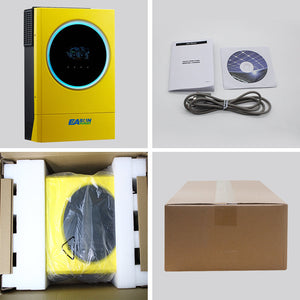
Main Features:
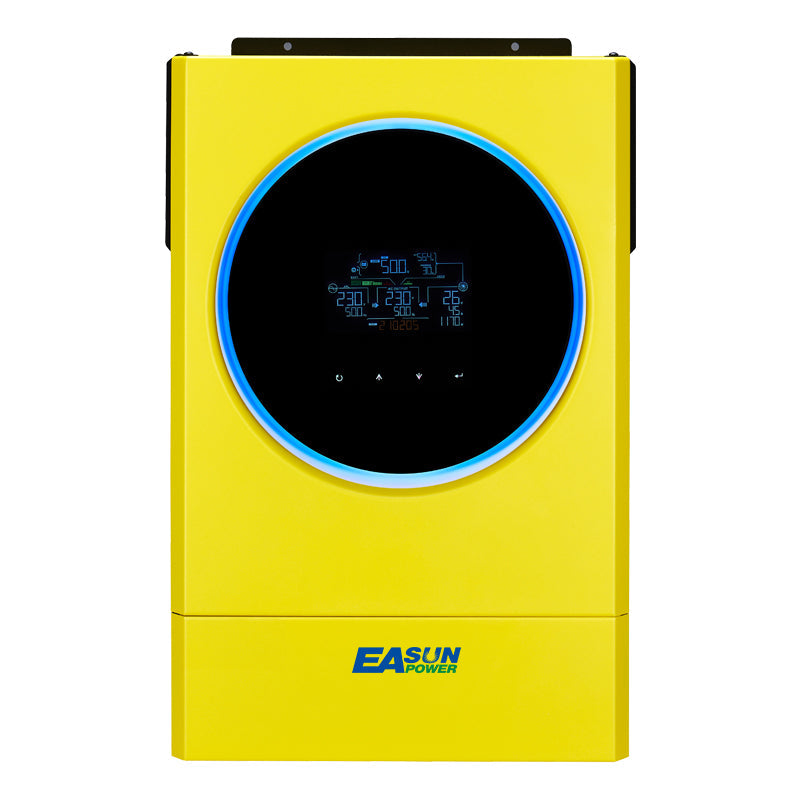
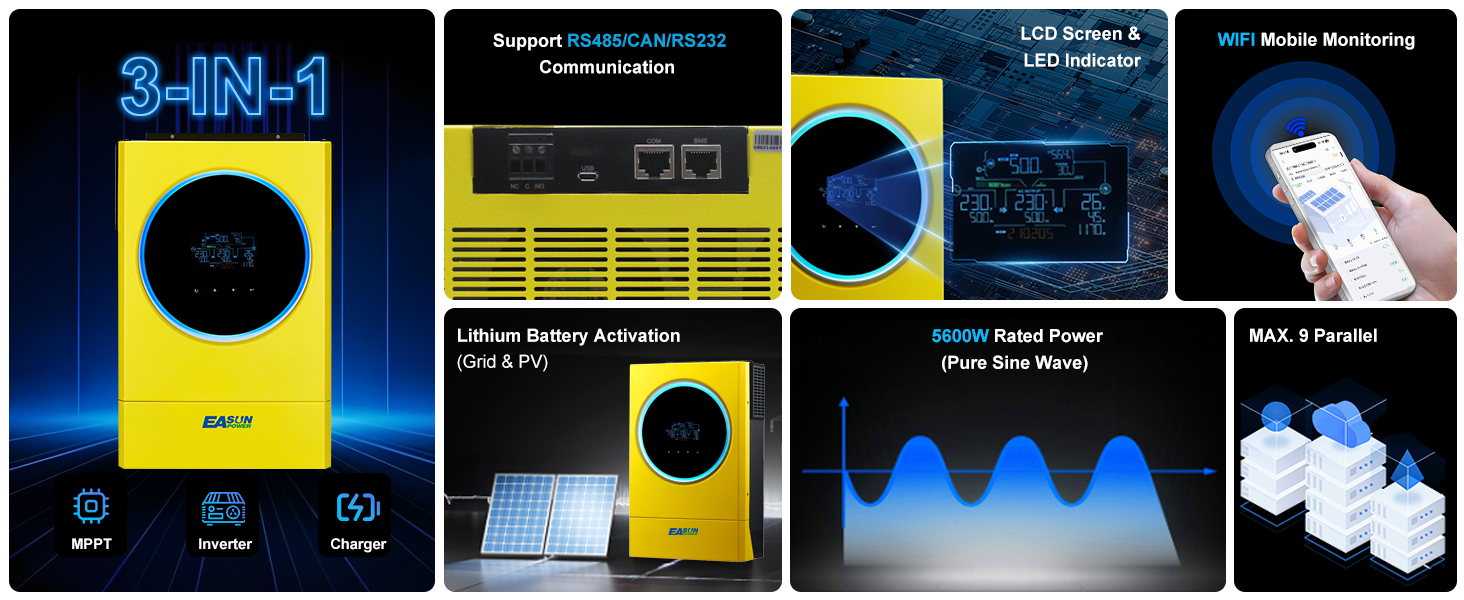
- Customizable status LED ring with RGB lights
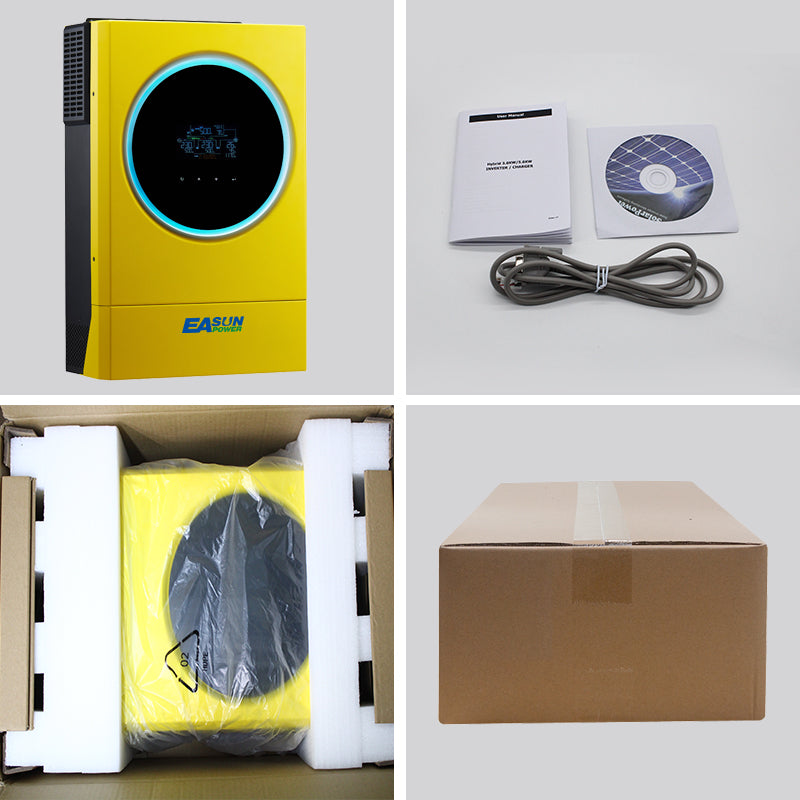
- Touchable button with 4.3" colored LCD
- Supports USB On-the-Go function
- Data log events stored in the inverter
- Self-consumption and Feed-in to the grid
- Programmable supply priority for PV, Battery or Grid
- User-adjustable charging current and voltage
- Programmable multiple operationmodes: Grid-tie,off-grid and grid-tie with backup
- Built-in Wi-Fi for mobile monitoring (App is available)
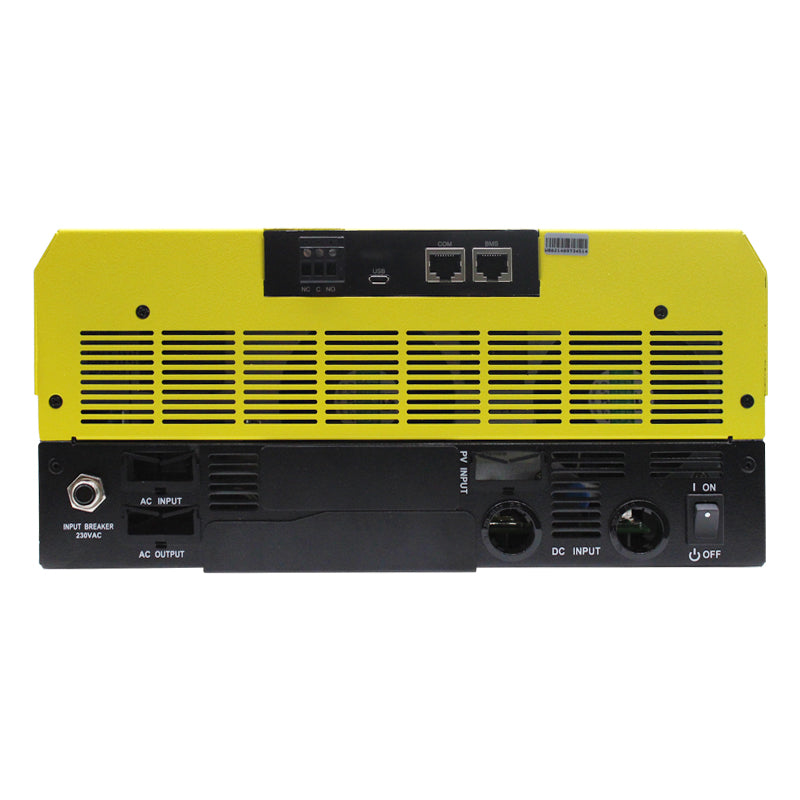
- Reserved communication port for BMS
- Parallel operation up to 9 units
UK Purchase Assurance
- Sourcing: Most items ship directly from our UK warehouse.
- Delivery: Enjoy free, fast shipping—most orders arrive within 5–10 business days. (Our customer service team will notify you promptly of any exceptional delays.)
- Payment: Secure payments via PayPal, Klarna, and all major credit cards.
- Returns: Hassle-free 30-day returns, subject to approval.
- Warranty: 2-Year Limited Service with easy claims process and lifetime tech support.

👉👉👉Attention: Non UK warehouse products
This product ships from our Poland warehouse. A 10% import duty deposit is included in the checkout price for UK orders and will be fully refunded after shipment.
Estimated delivery time: approximately 10 business days.
Download the full user manual & installation guide:
The three most suitable groups of people…



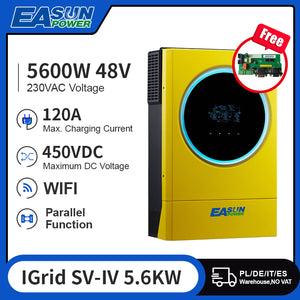
EASUN POWER 48V 5600W Hybrid Inverter
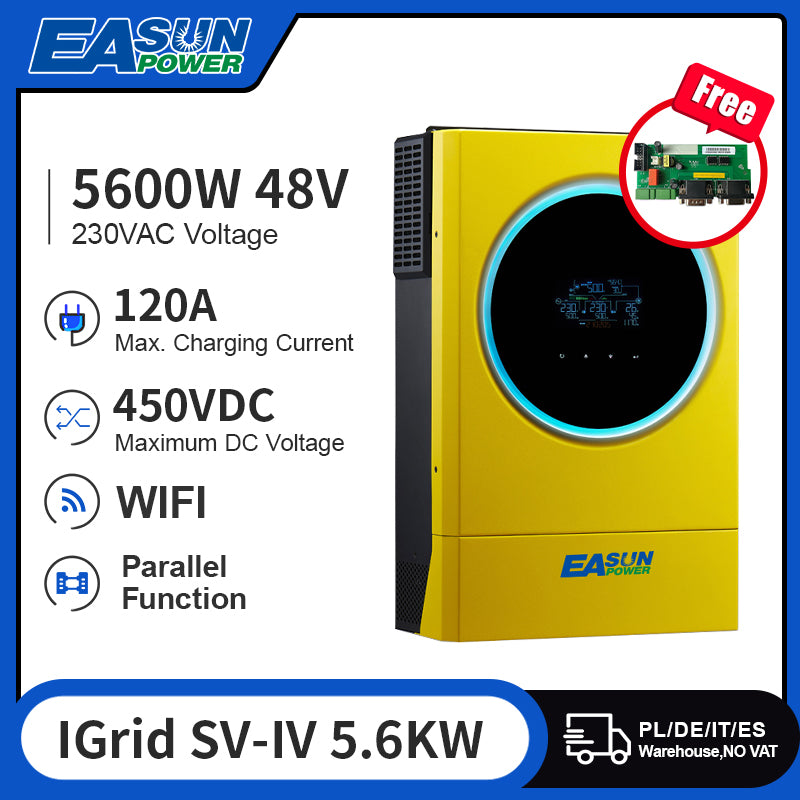
From its all-in-one design, 5600W rated power and up to 6000W peak output, to the clear LCD display, WiFi mobile monitoring, and RS485 communication support — the EASUN POWER 48V 5600W solar inverter and battery charger delivers an efficient, intelligent, and stable energy management solution for every home power need.
Smarter Integration, Stronger Output
The EASUN POWER all-in-one solar inverter and charger combines a 120A MPPT controller and a 5600W inverter into a single unit, minimizing wiring complexity while maximizing functionality — an ideal choice for streamlining home energy systems.
3-in-1 Design, Saves Nearly 50% of Space
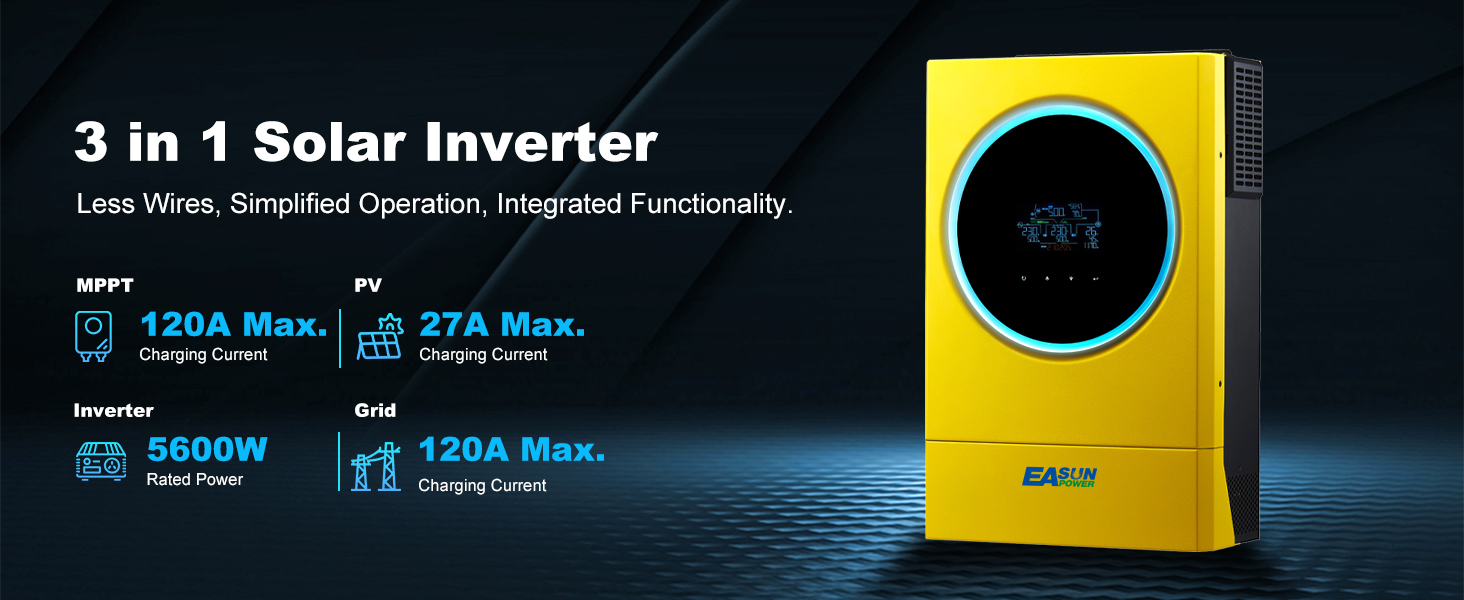
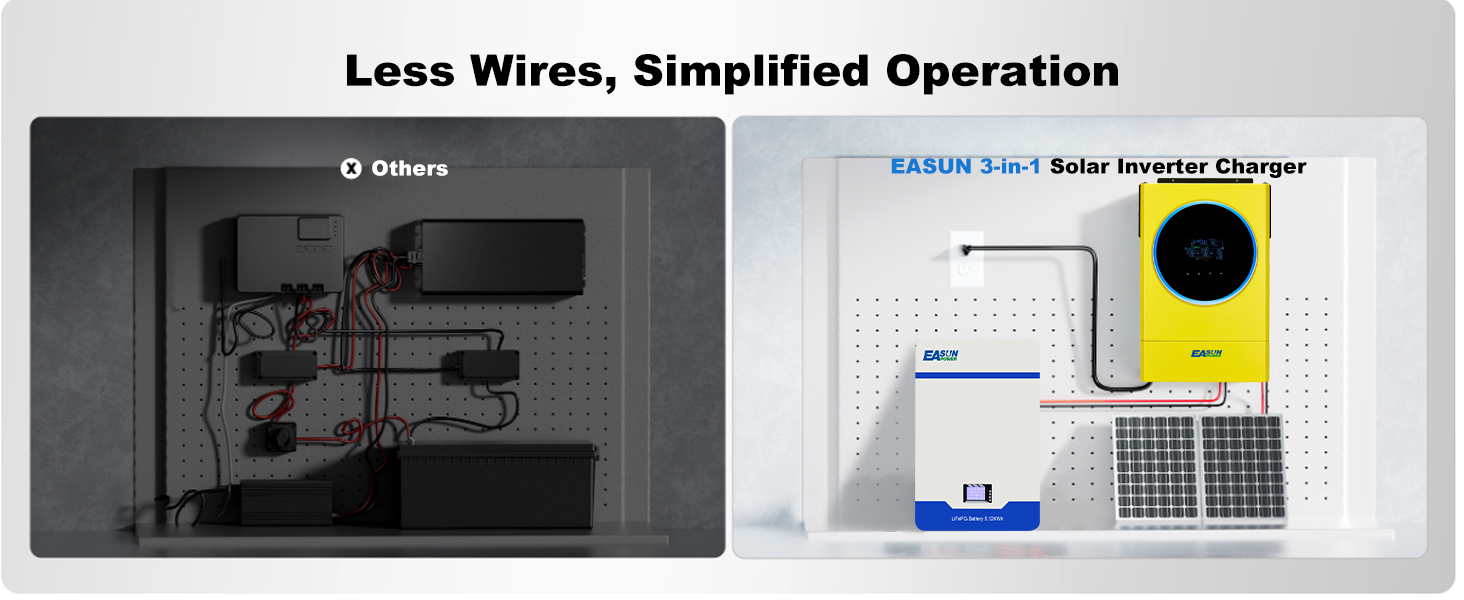
Say goodbye to messy wiring and scattered components! The EASUN POWER solar inverter charger integrates MPPT, inverter, and charger into a compact unit — saving installation space, simplifying wiring, and making your home energy system cleaner, safer, and easier to manage.
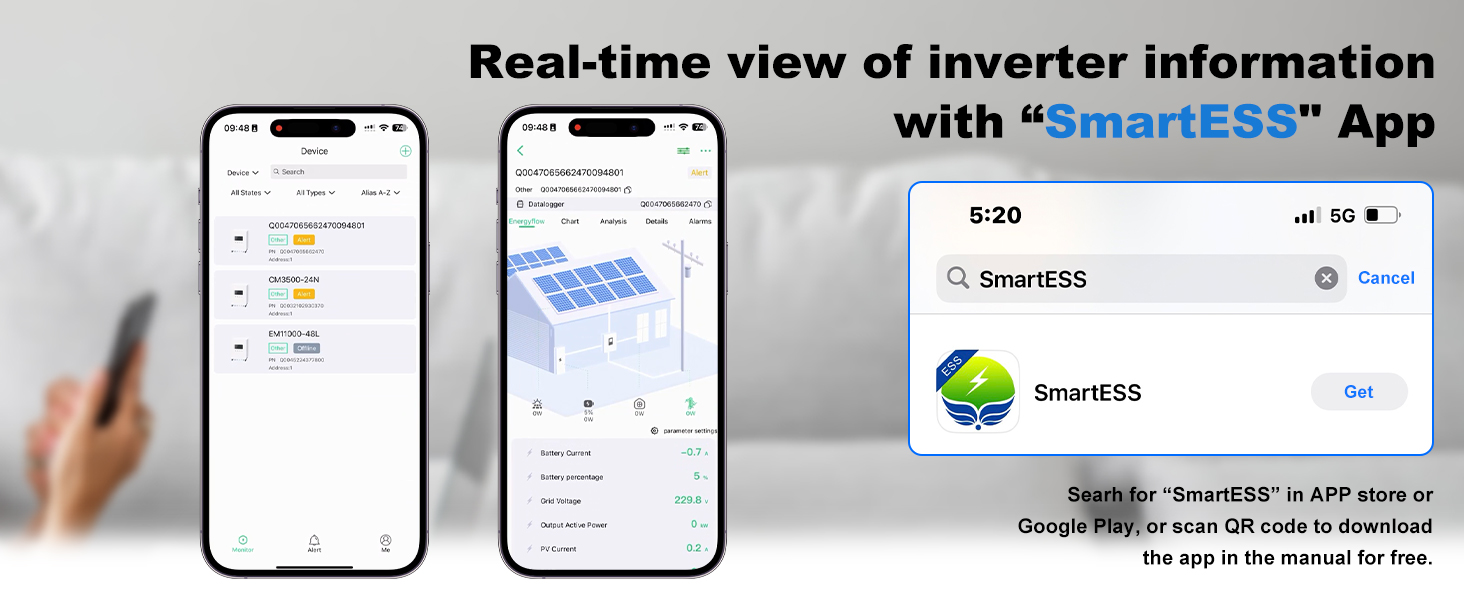
Seamless Mobile Monitoring with the “SmartESS” App
View real-time battery information using the “SmartESS” app. Simply search for “SmartESS” in the App Store or Google Play, or scan the QR code in the manual to download the app for free. This allows you to conveniently monitor and manage inverter performance directly from your smartphone or tablet.
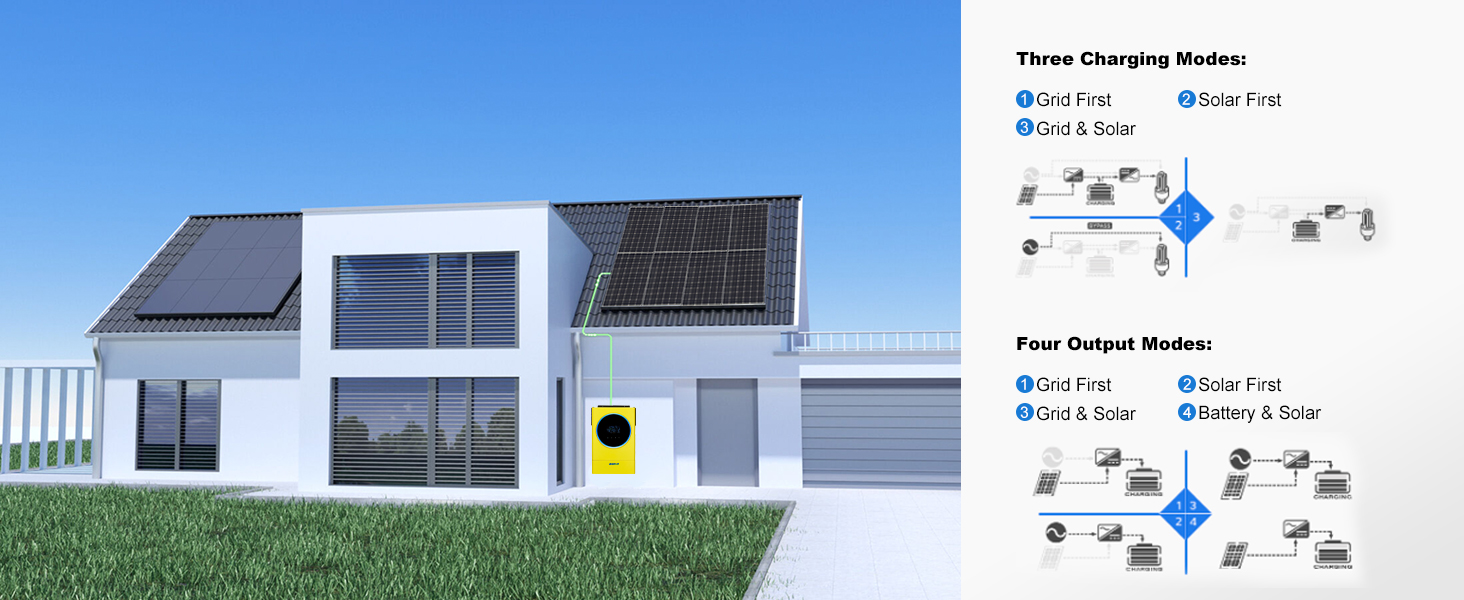
Flexible Charging & Output Options
Choose from 3 charging modes and 4 output priorities to match your energy needs. Ideal for dynamic home energy systems and ensuring uninterrupted power wherever you live.
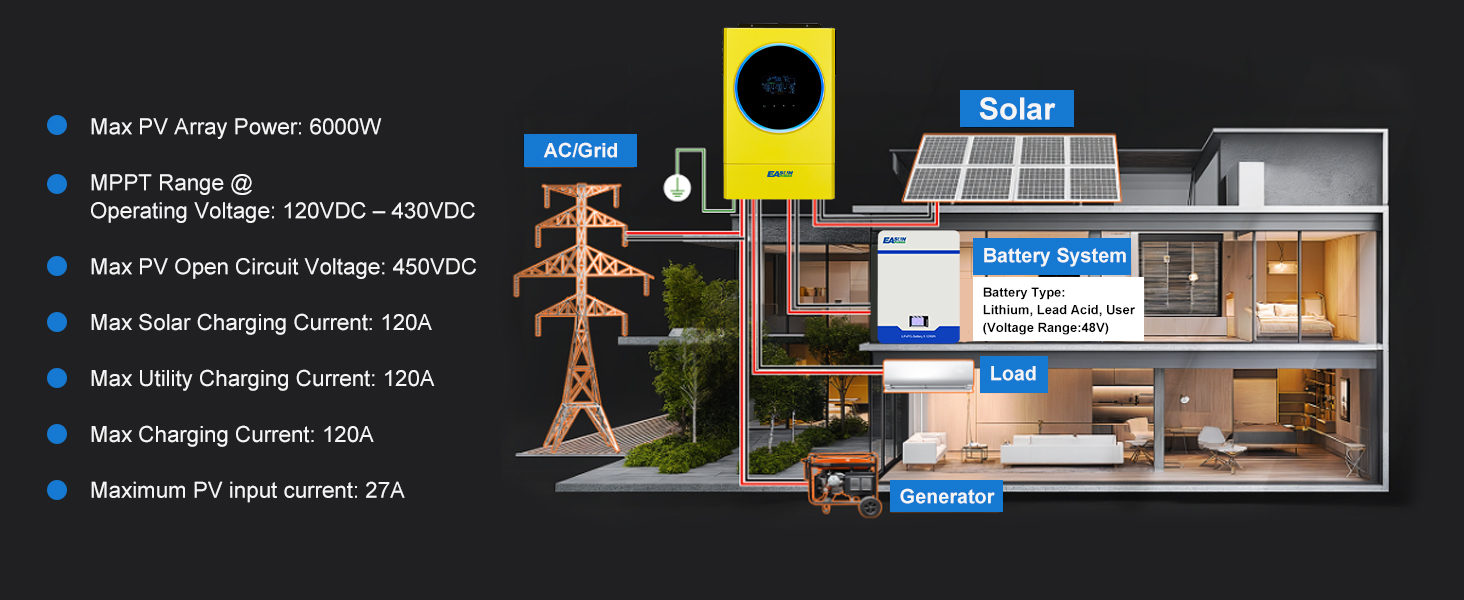
Build Your Solar System with the EASUN POWER 5600W Solar Inverter
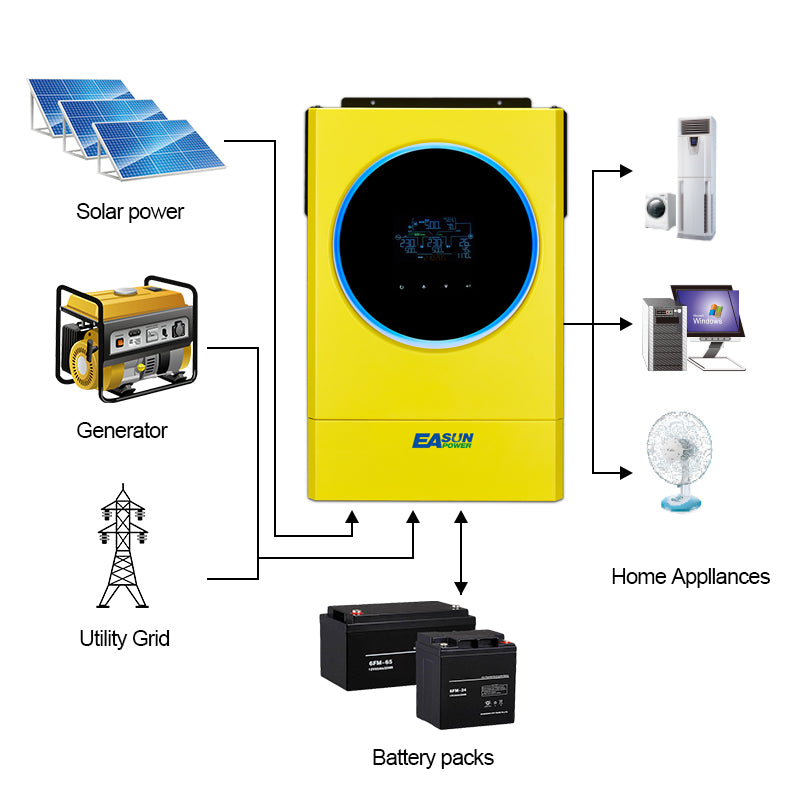
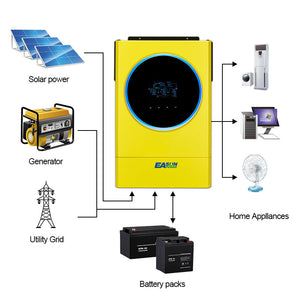
The EASUN 48V 5600W solar inverter integrates solar input, grid power, and battery charging capabilities—offering seamless charging, stable power output, and reliable backup power. Easily create a complete and professional home energy system.
Suitable for Various Occasions
Easunpower 48V 6200W solar inverter battery charger is designed to be suitable for various occasions, offering a versatile and reliable energy management solution for a range of applications including garages, home, solar systems, farms and so on.

Frequently asked questions
Still looking for an answer?
1. How do I configure BMS communication with lithium batteries?
EASUN SV IV 5.6KW supports RS485 communication with a variety of BMS systems such as Pylontech, JK, Jikong, and Daly.
Pylontech BMS: Select battery type “Li2” in the inverter menu and set BMS to “PylonRS485”.
Daly BMS: Some users report success using “Li4” and setting Daly BMS to "Growatt" protocol.
JK BMS: It is recommended to use “Li2” and ensure correct wiring.
Note: Wiring methods may vary depending on the BMS brand. Please refer to the connection diagrams or consult technical support.
Click to check how to connect to Easun Battery
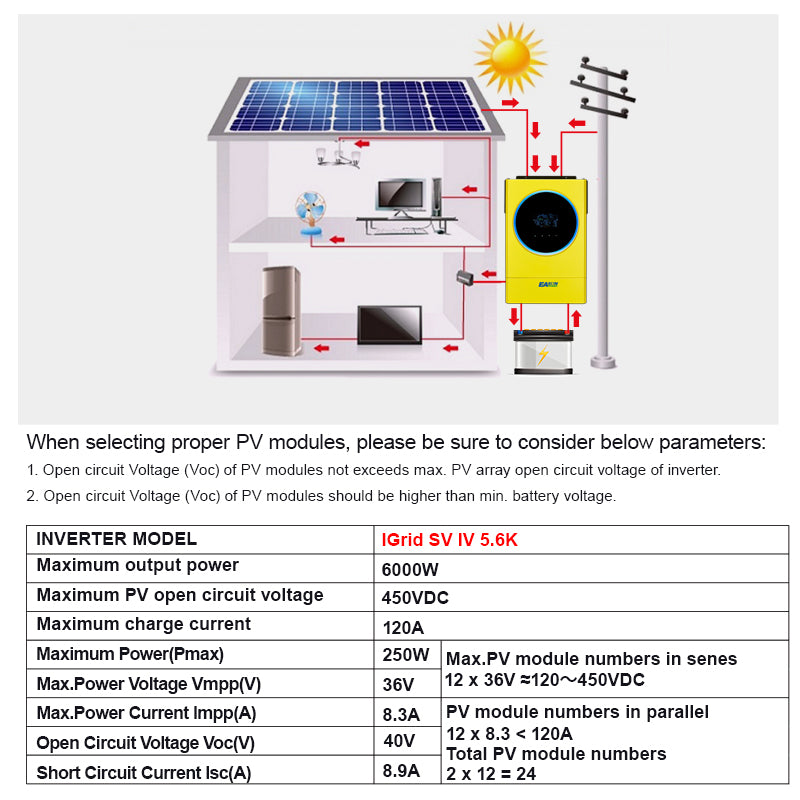
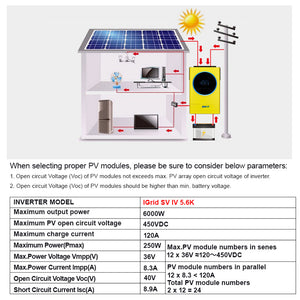
2. How do I know If this inverter is compatible with my solar panels?
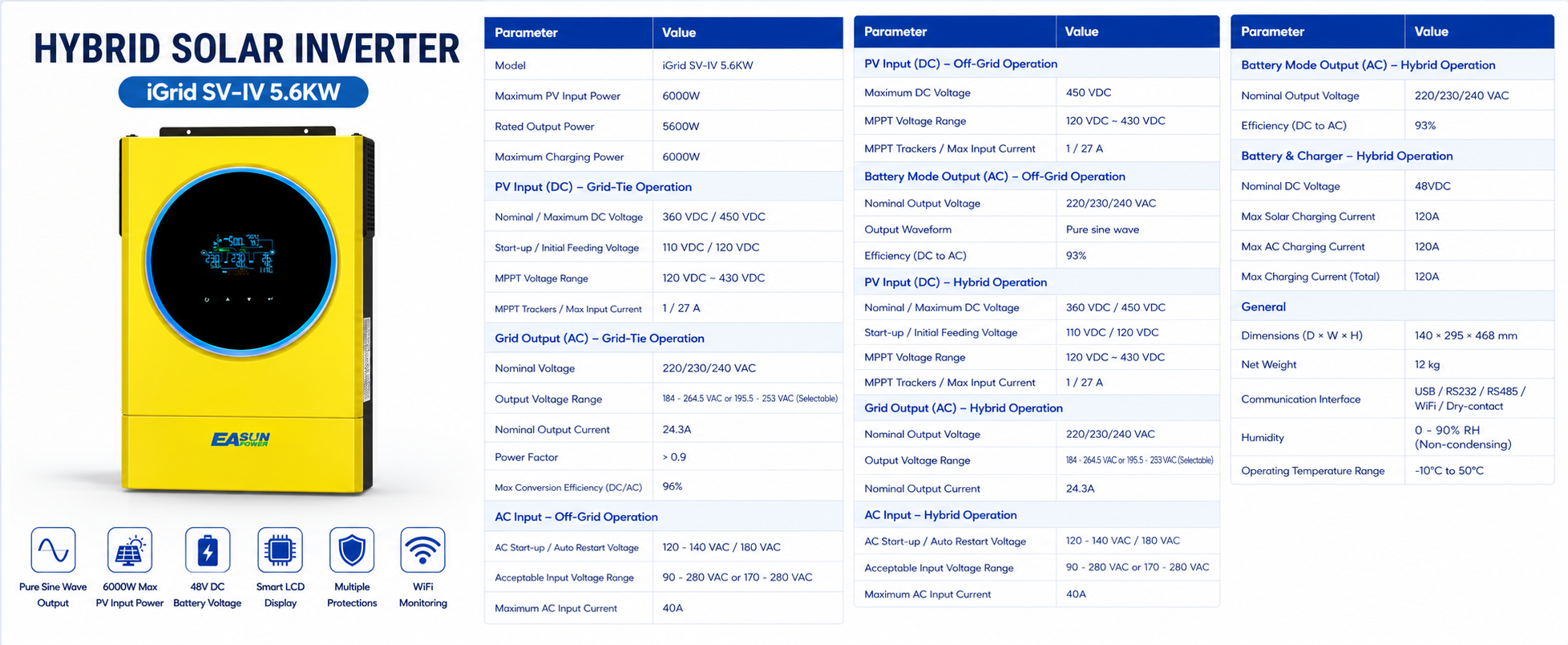
According to the inverter's specification table, the max solar input current is 27A, which means MPPT can handle a maximum of 27A.
The optimal voltage range for the MPPT is 330-380V, and it should not exceed 380V.
Based on this information, when you review the specifications of your solar panels, you should ensure that—whether connected in series or parallel—the total voltage or current connected to each MPPT input does not exceed these limits.
3. What is the minimum PV voltage required to start the inverter?
The MPPT controller requires at least 120VDC PV input to start, but a recommended input of 250VDC or higher is suggested to ensure stable power output under load.
4. How can I fix the issue of the LCD screen flickering?
Some users have reported flickering on the inverter's display.
A common solution is to connect an X2-class capacitor in parallel between PV+ and PV- to stabilize voltage fluctuations.
⚠️ This operation requires electrical knowledge. Please consult a professional.
5. Does the inverter support parallel operation?
Yes, Supports parallel connection, up to 9 units can be connected
6. How does the WiFi monitoring work?
The inverter has a built-in WiFi module and can be monitored via a mobile app.
Download the recommended monitoring app and follow the instructions in the user manual.
Note: Data updates from the WiFi module may occur at 5-minute intervals.
7. Can the inverter run without a battery?
Yes, EASUN SV IV 5.6KW supports batteryless operation.
In this mode, the inverter uses PV input directly to power loads. However, it is recommended to carefully evaluate power stability and load demands when designing your system.