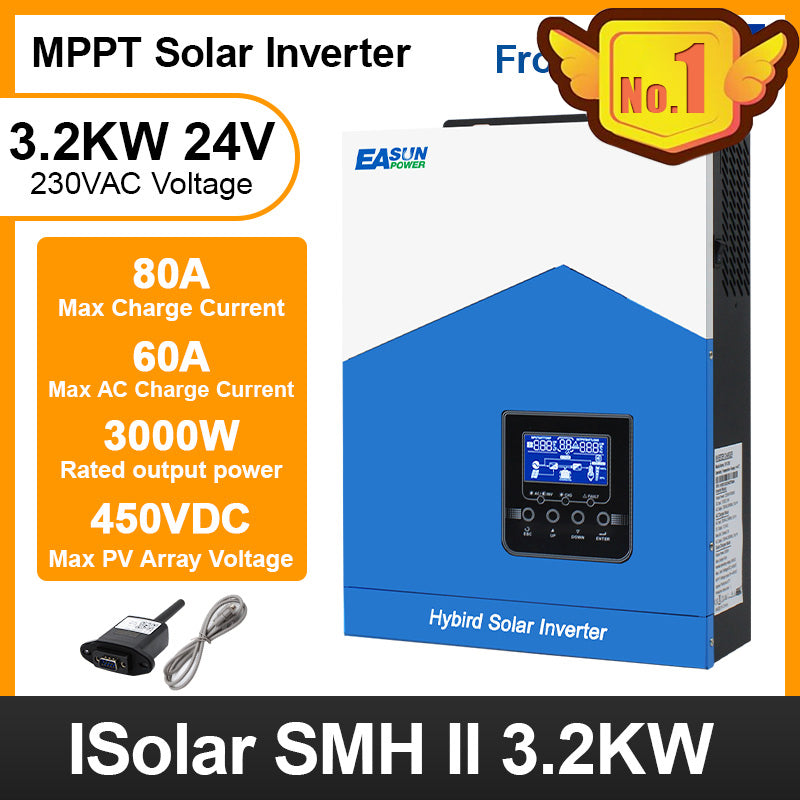
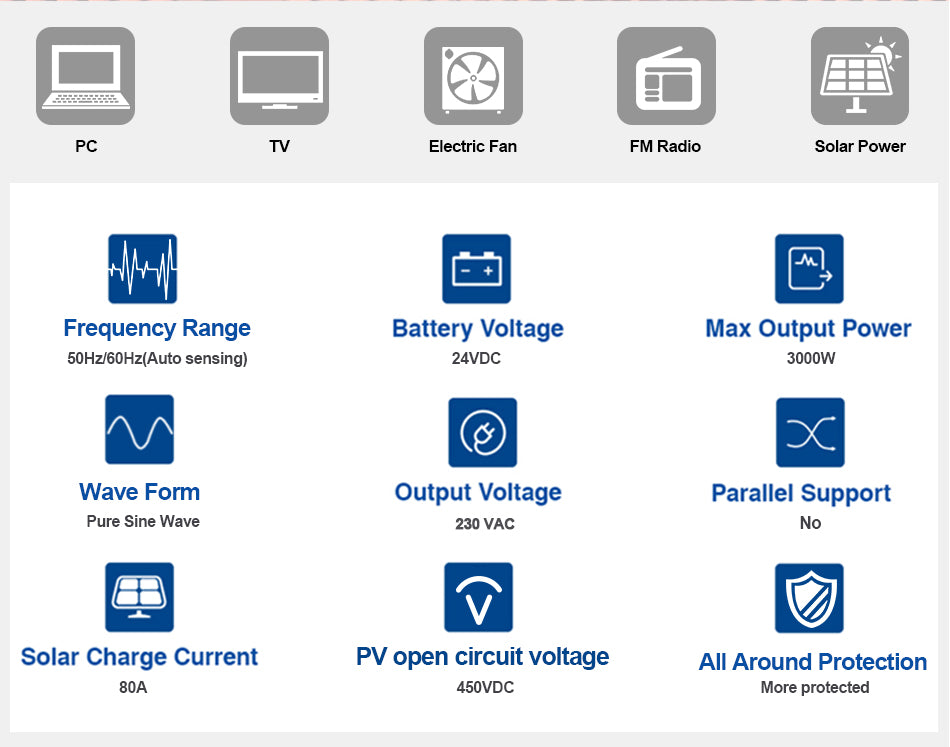
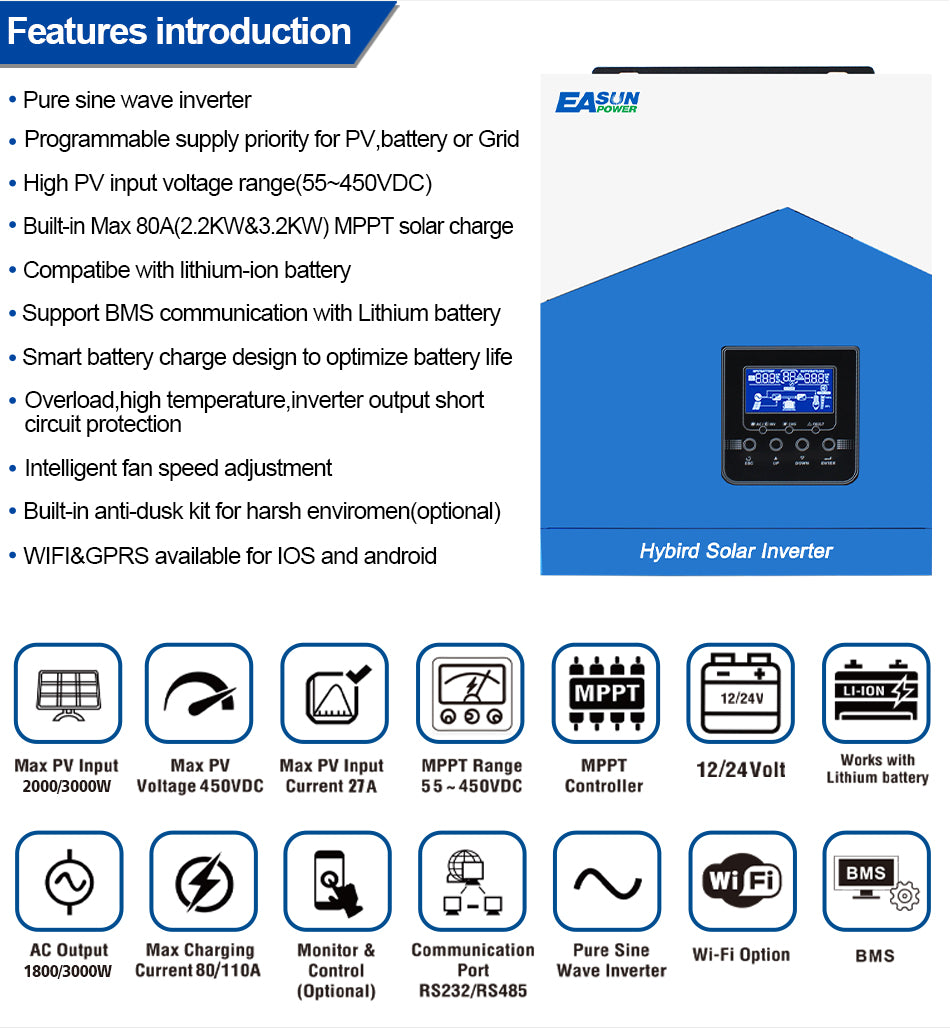
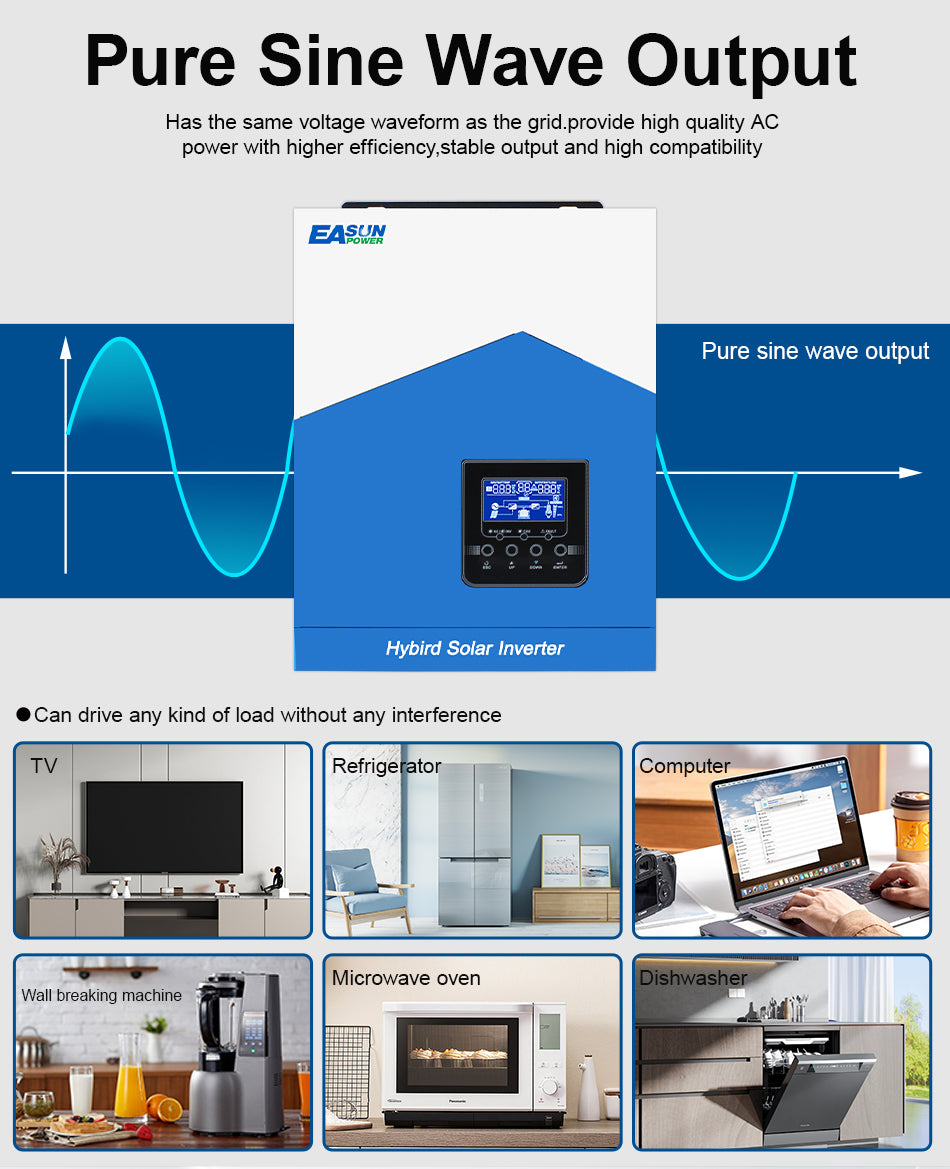
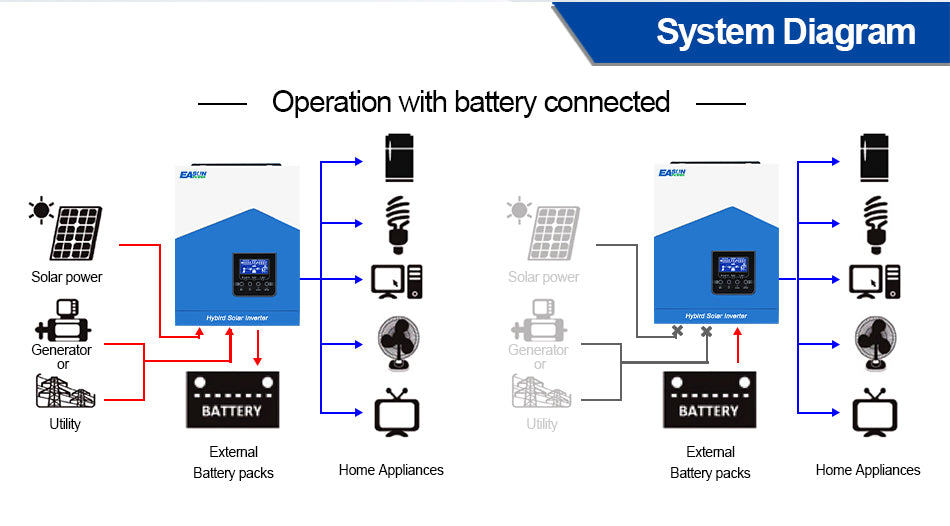
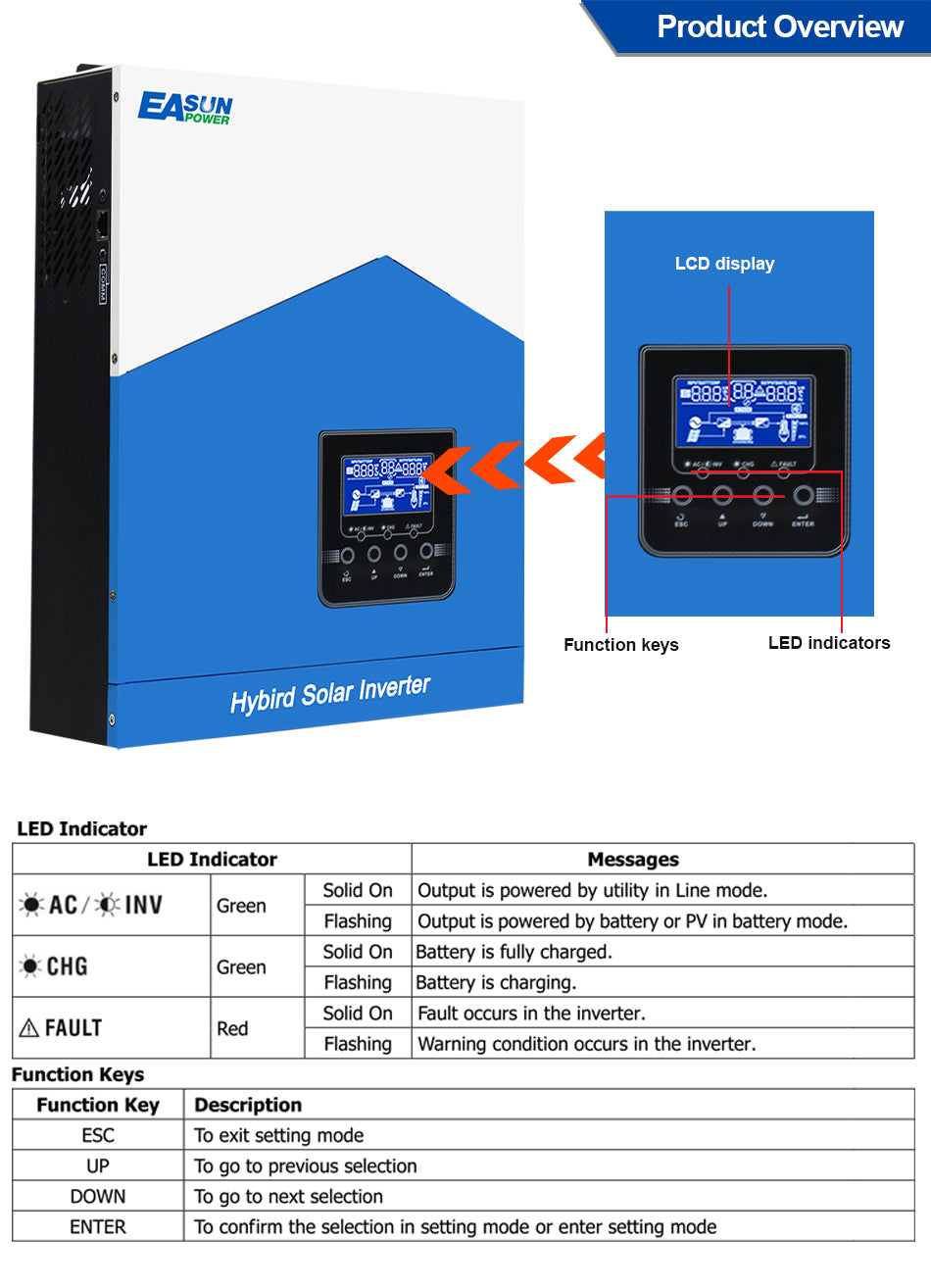
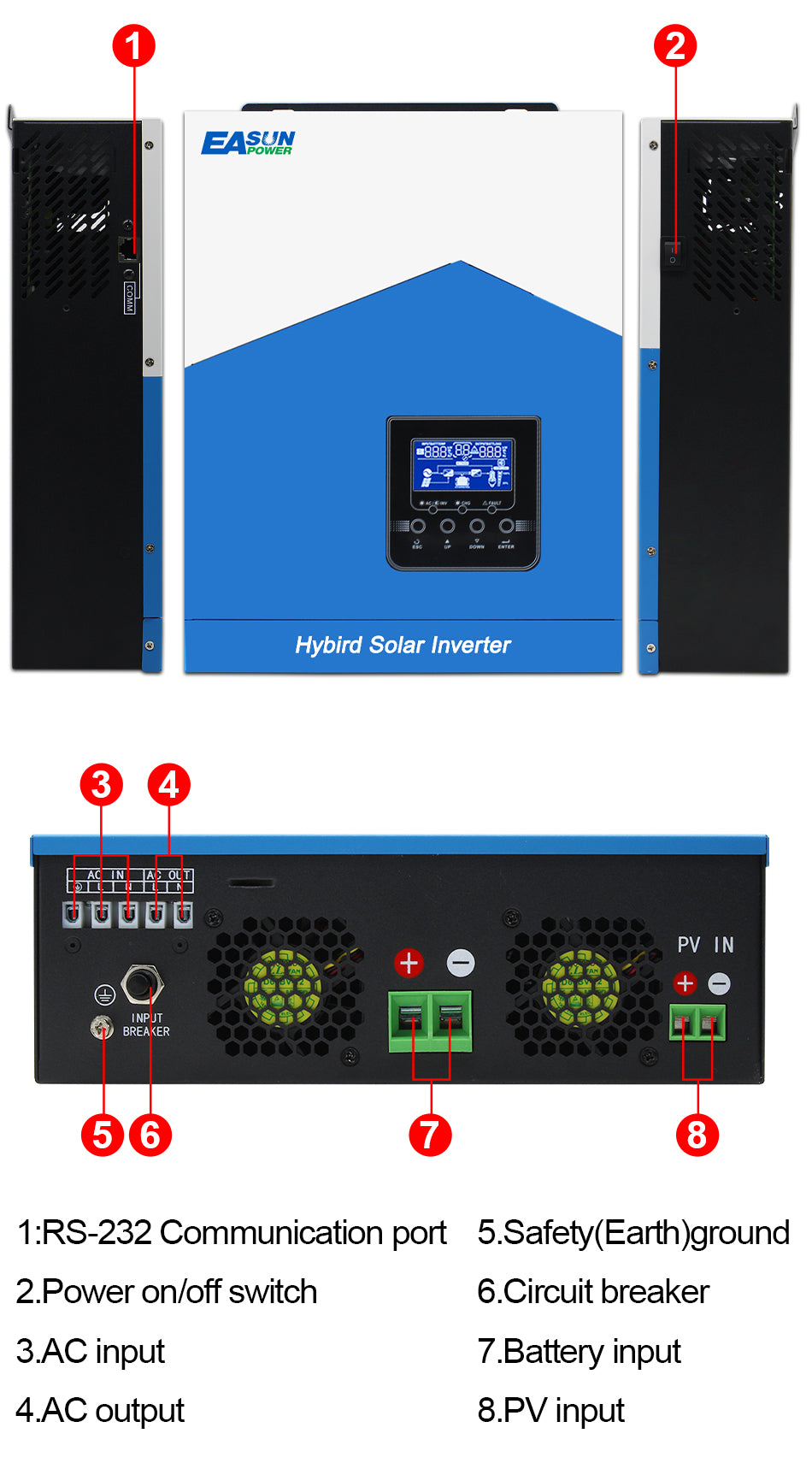
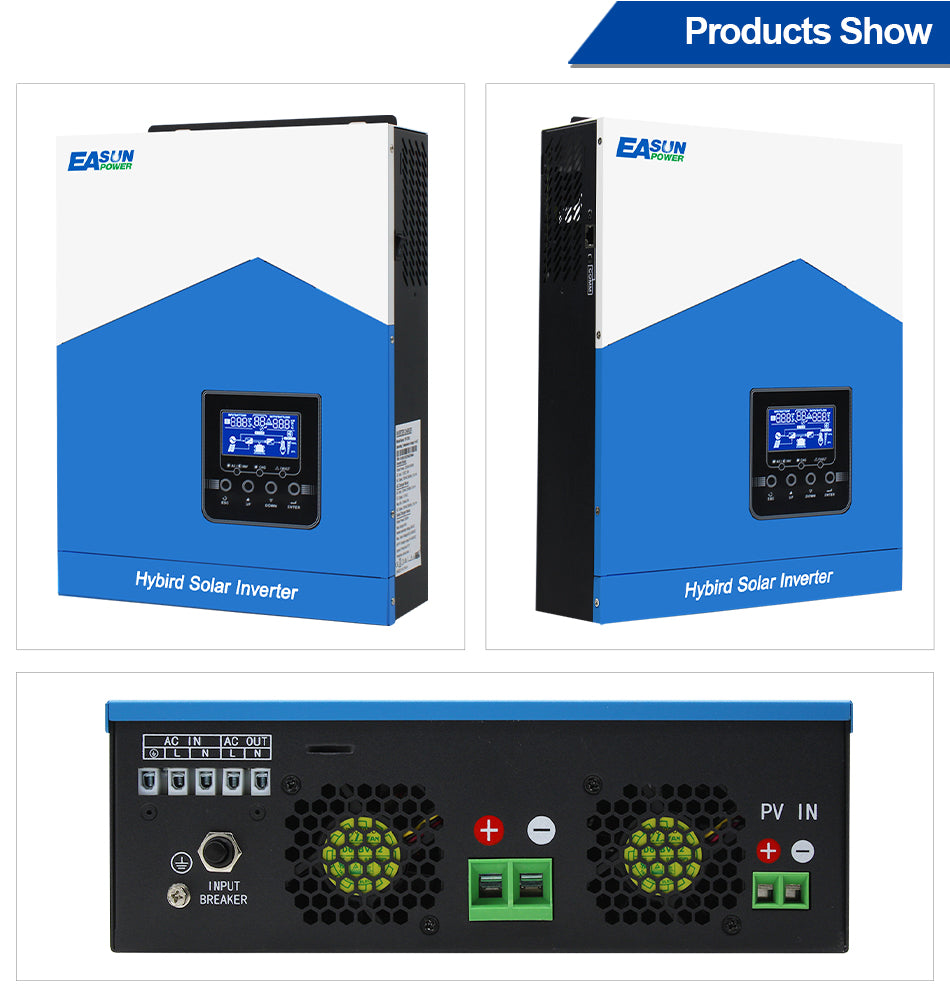
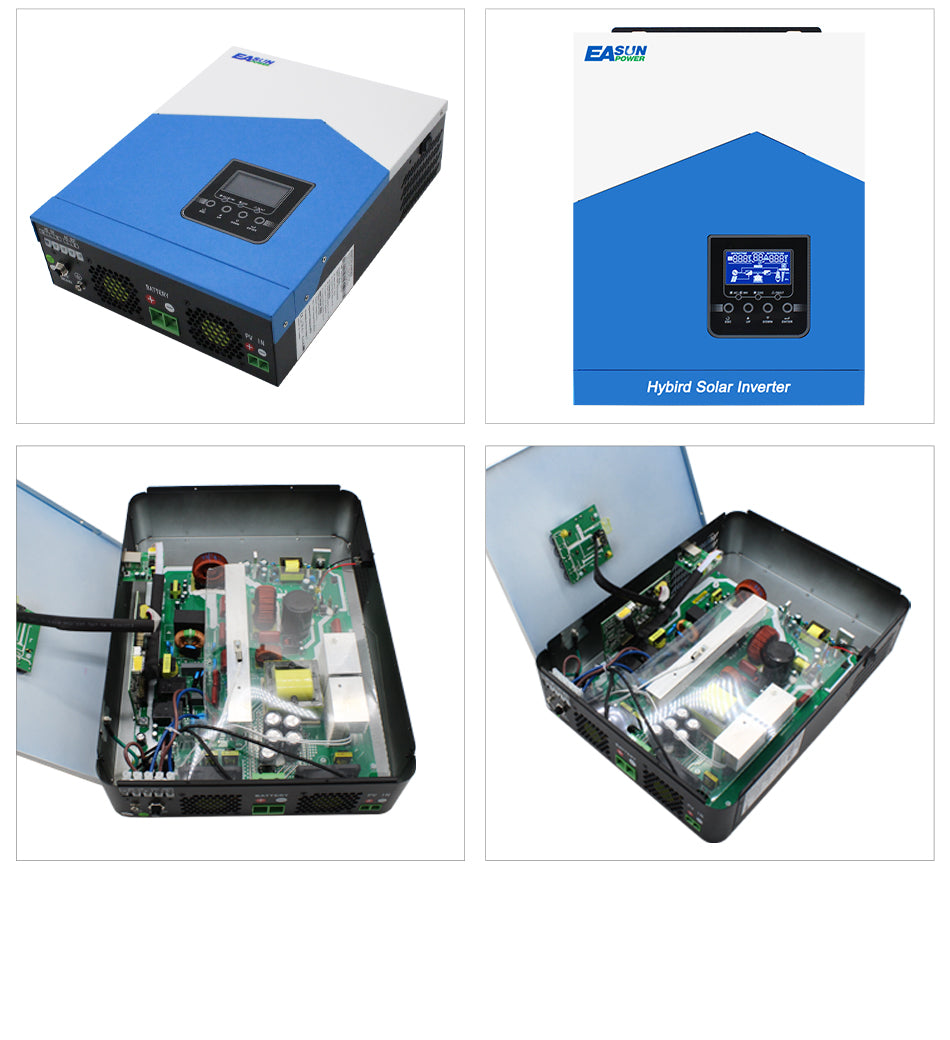
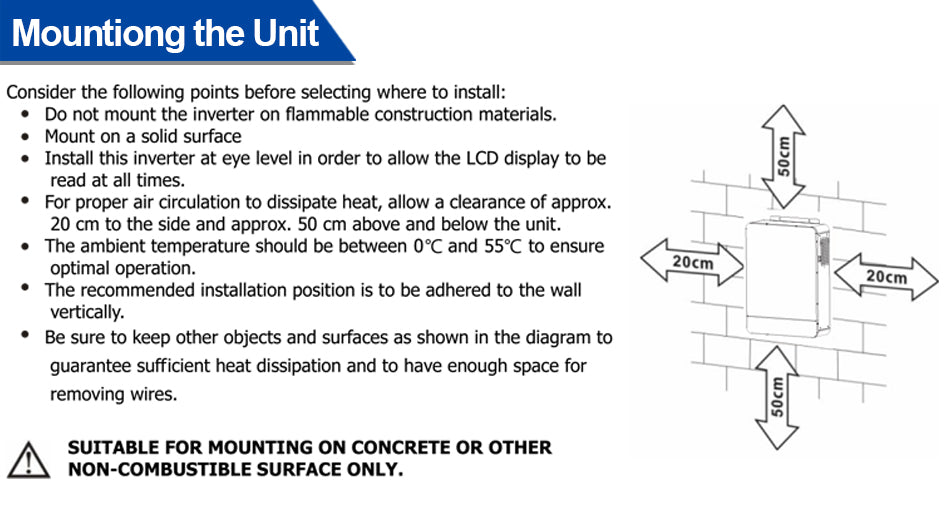
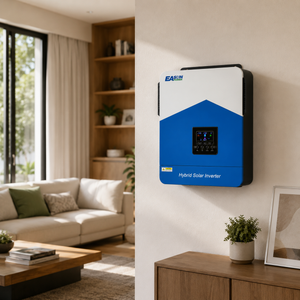
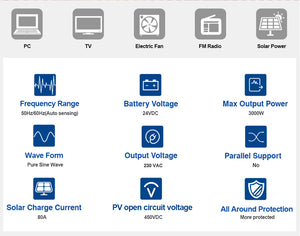
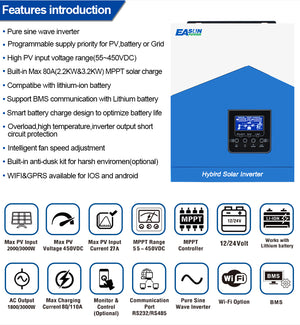
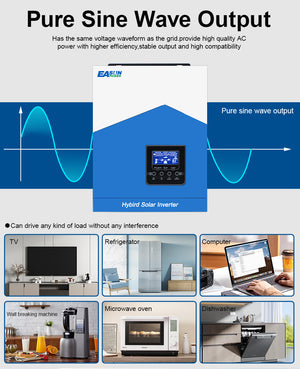
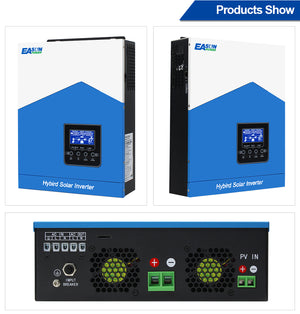
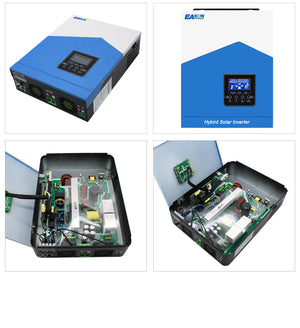
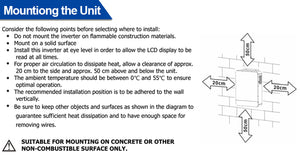
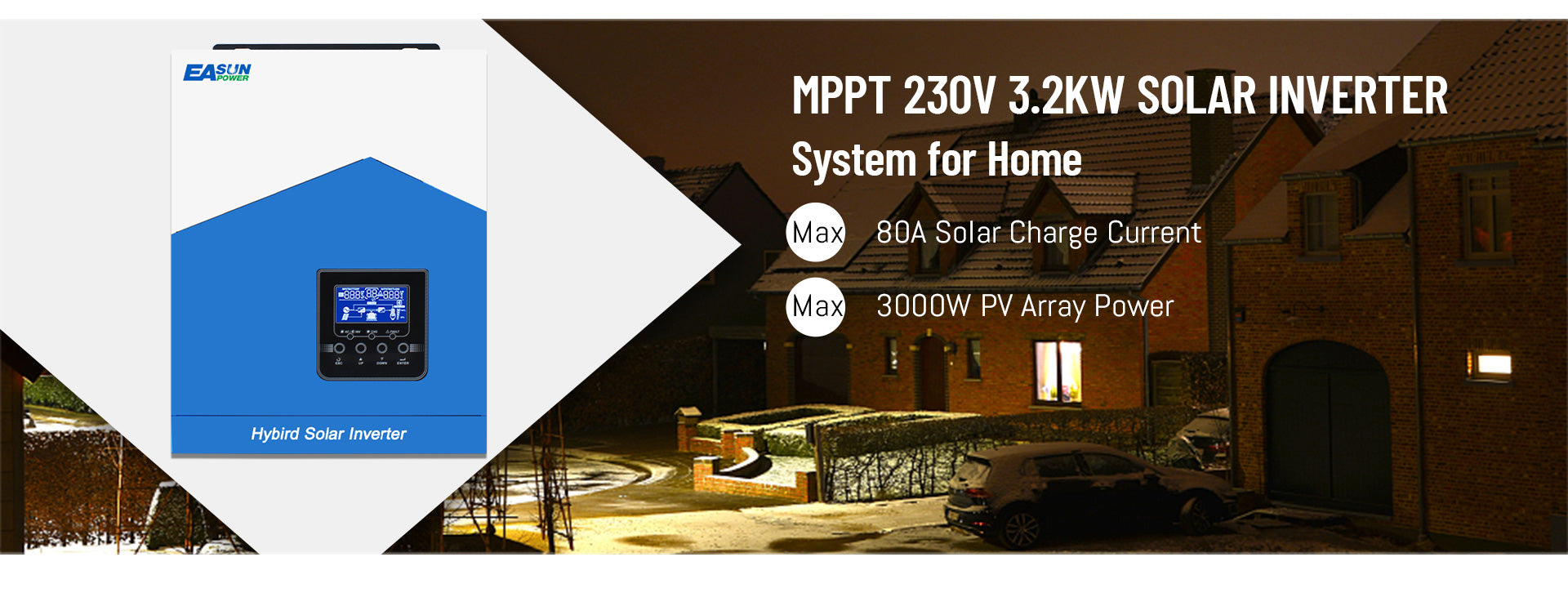
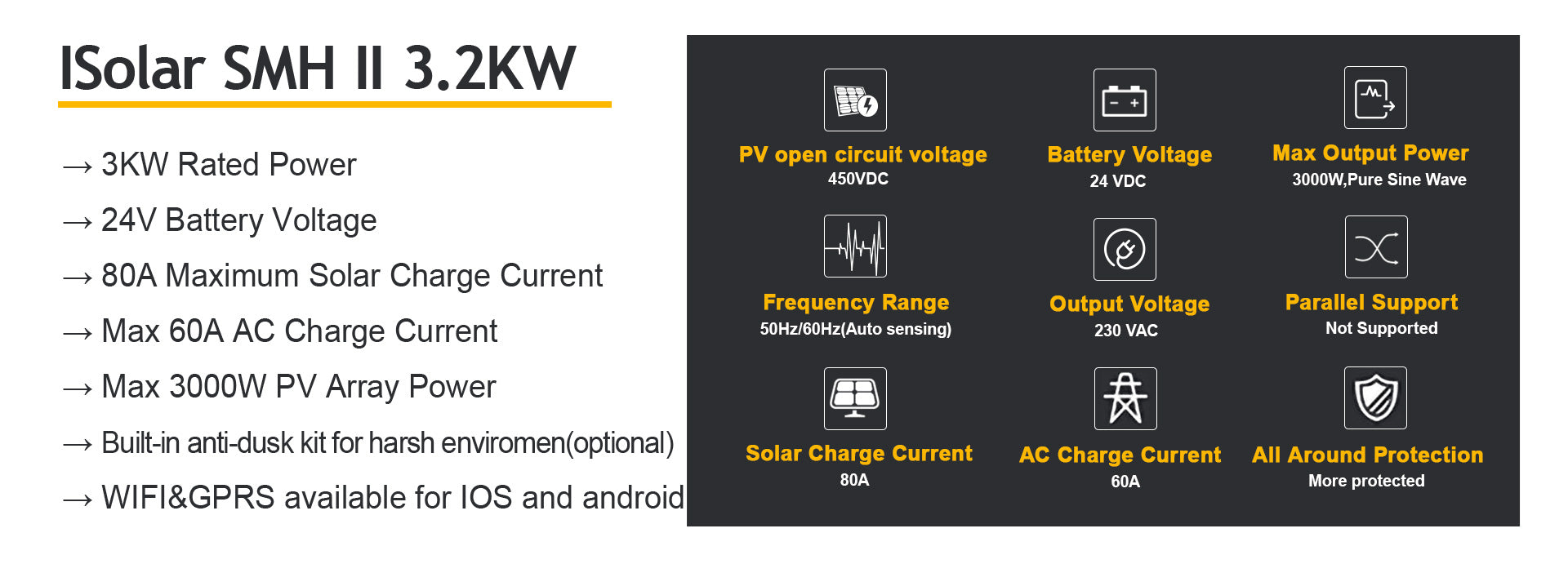
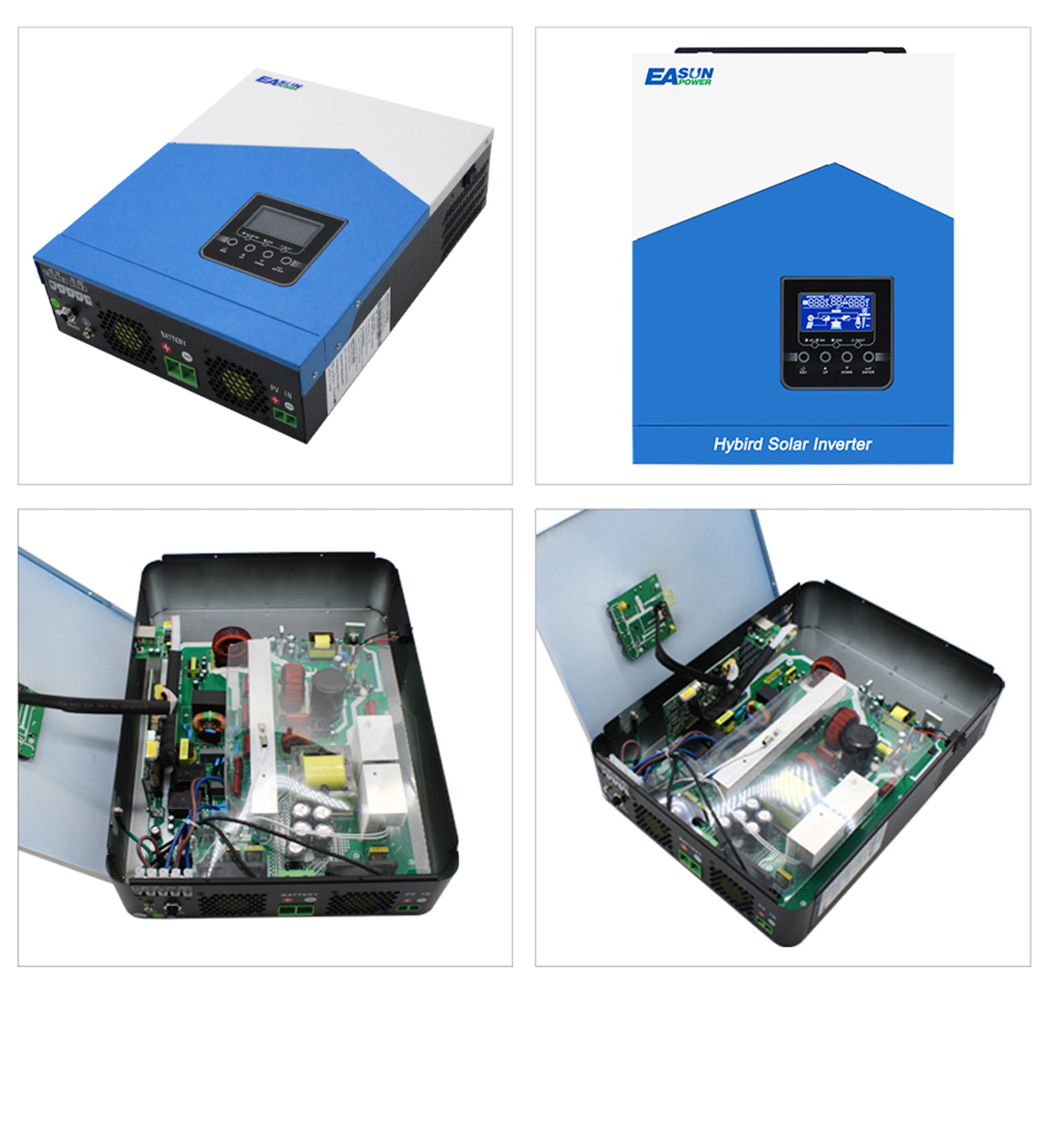
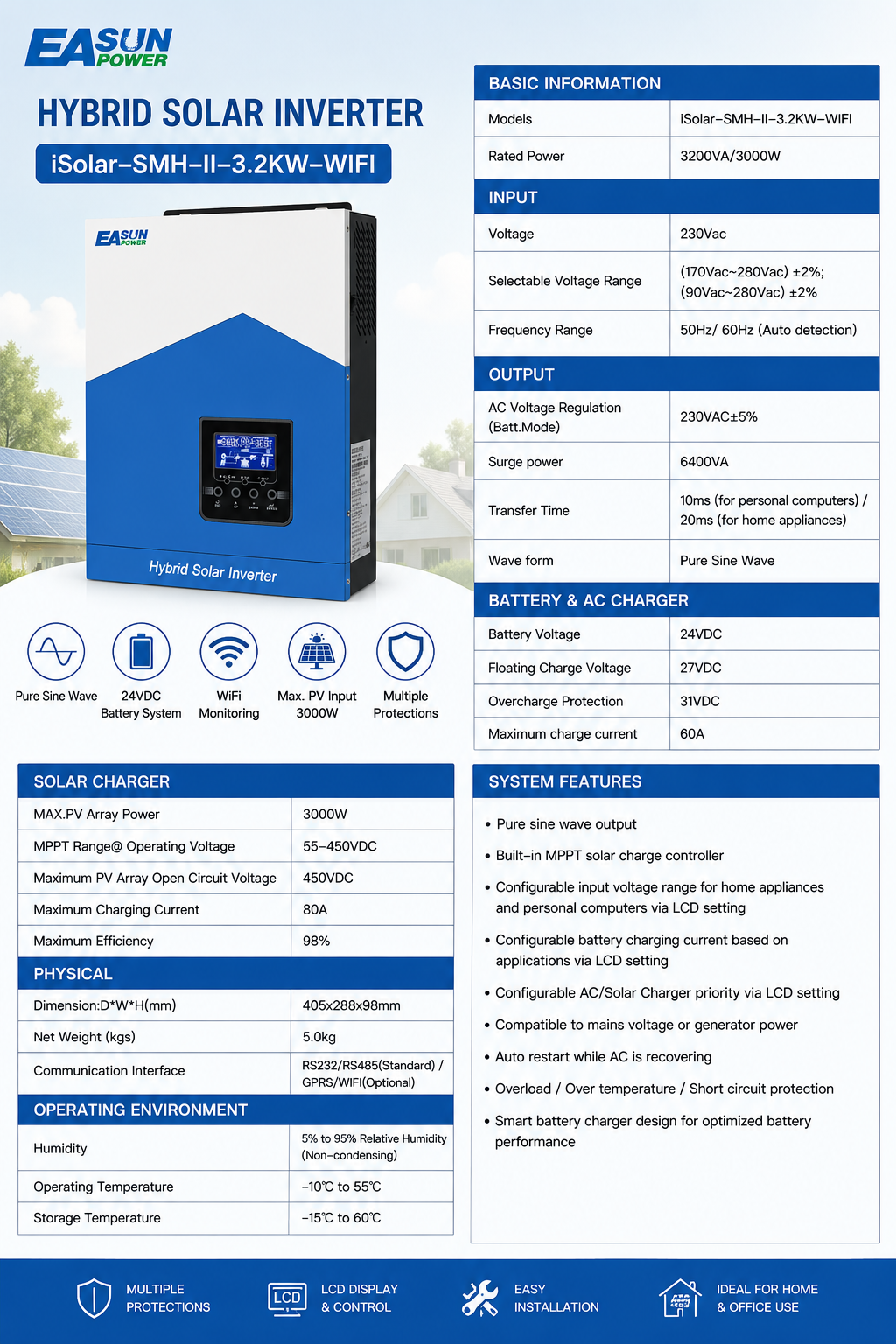
1)Pune sine wave inverter
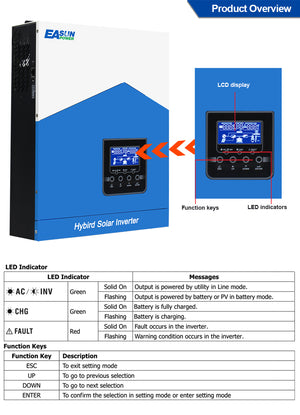
2)Configurable input voltage range for home appliances and personal computers via LCD setting
3)Configurable battery charging current based on applications via LCD setting
4)Configurable AC/Solar Charger priority via LCD setting
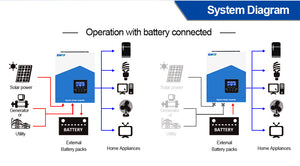
5)Compatible to mains voltage or generator power
6)Auto restart while AC is recovering
7)Overload/ Over temperature/ short circuit protection
8)Smart battery charger design for optimized battery performance
9)Cold start function
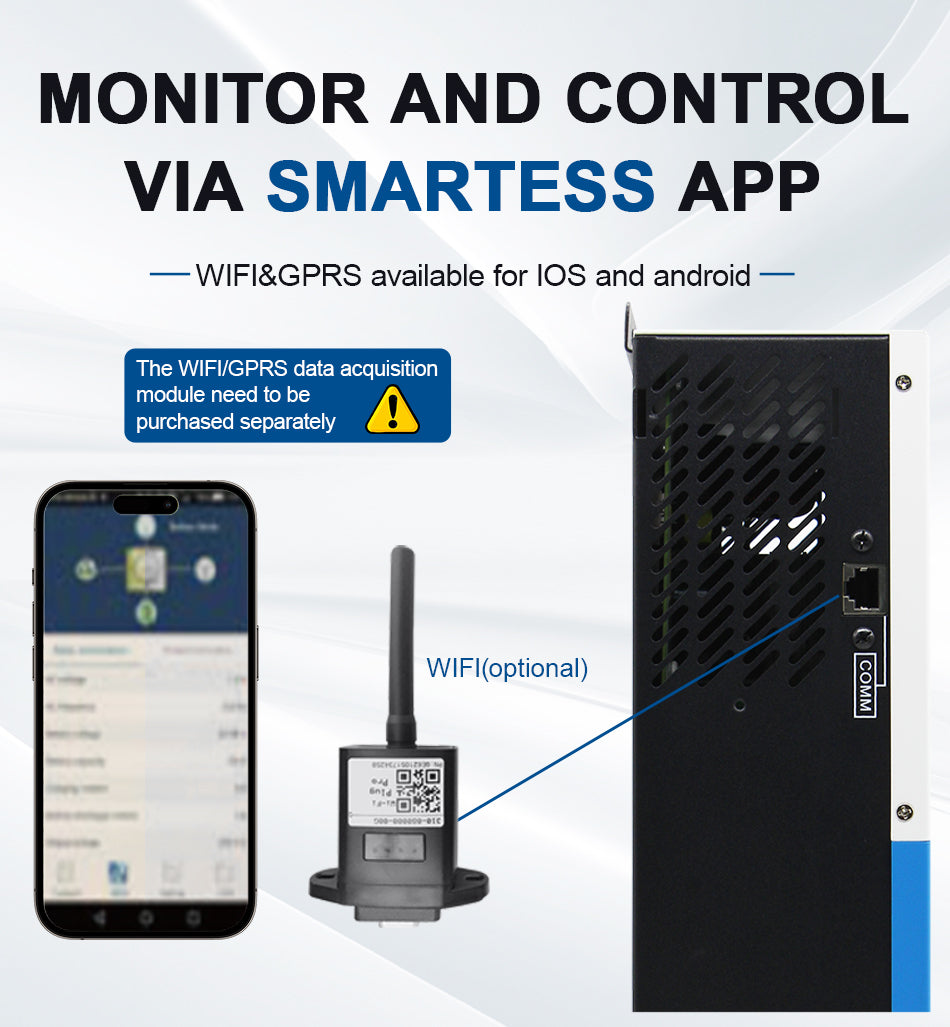
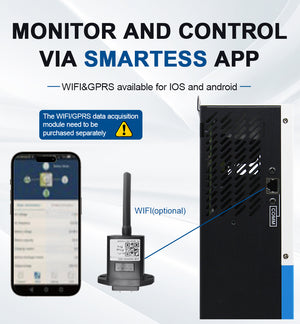
10)WIFI/GPRS(Option)
- Secure Checkout – PCI-DSS compliant
- Fast Delivery – Ships in 2 workdays from EU
- 2-Year Limited Service – easy claims & lifetime tech support
- 30-Day Return Policy – hassle-free process

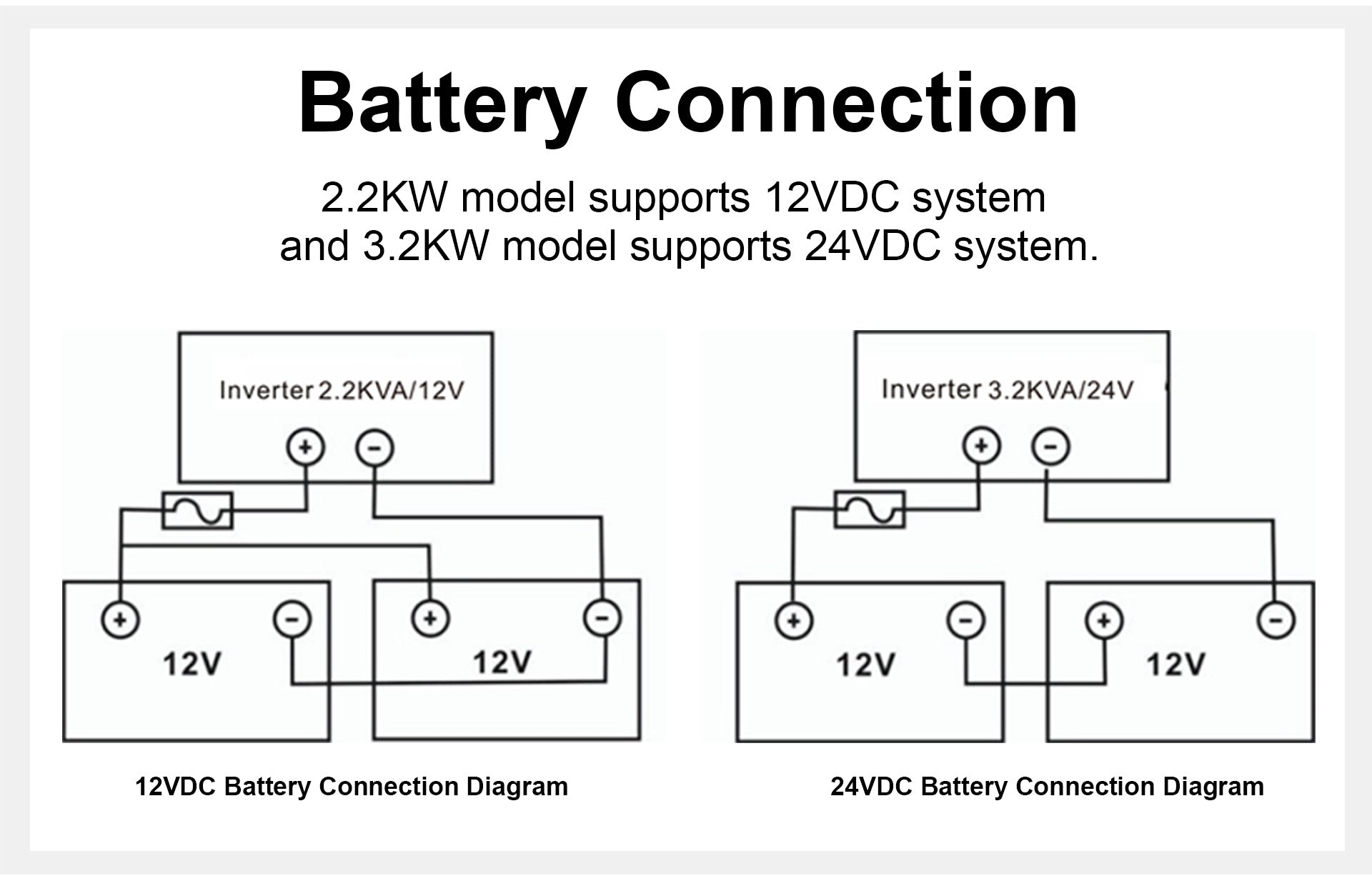
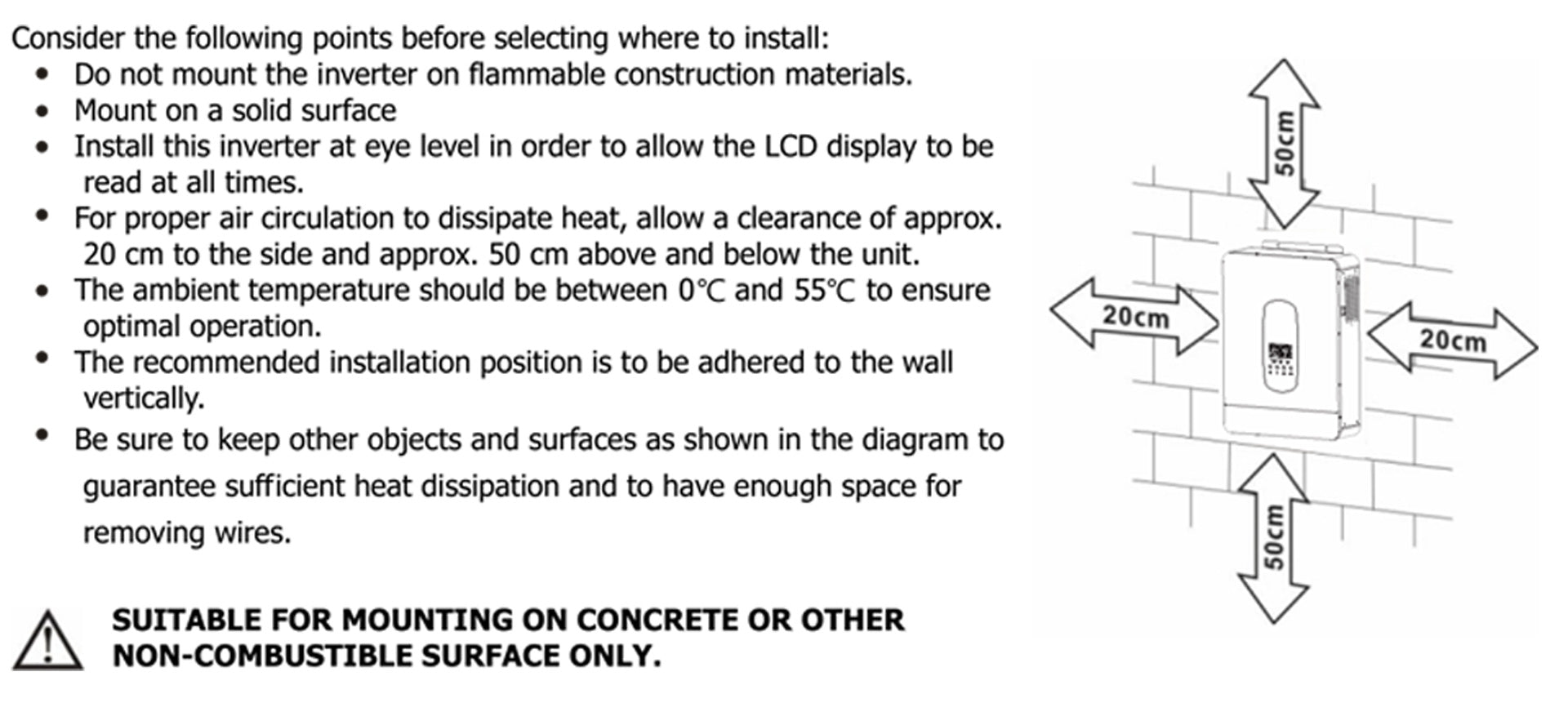
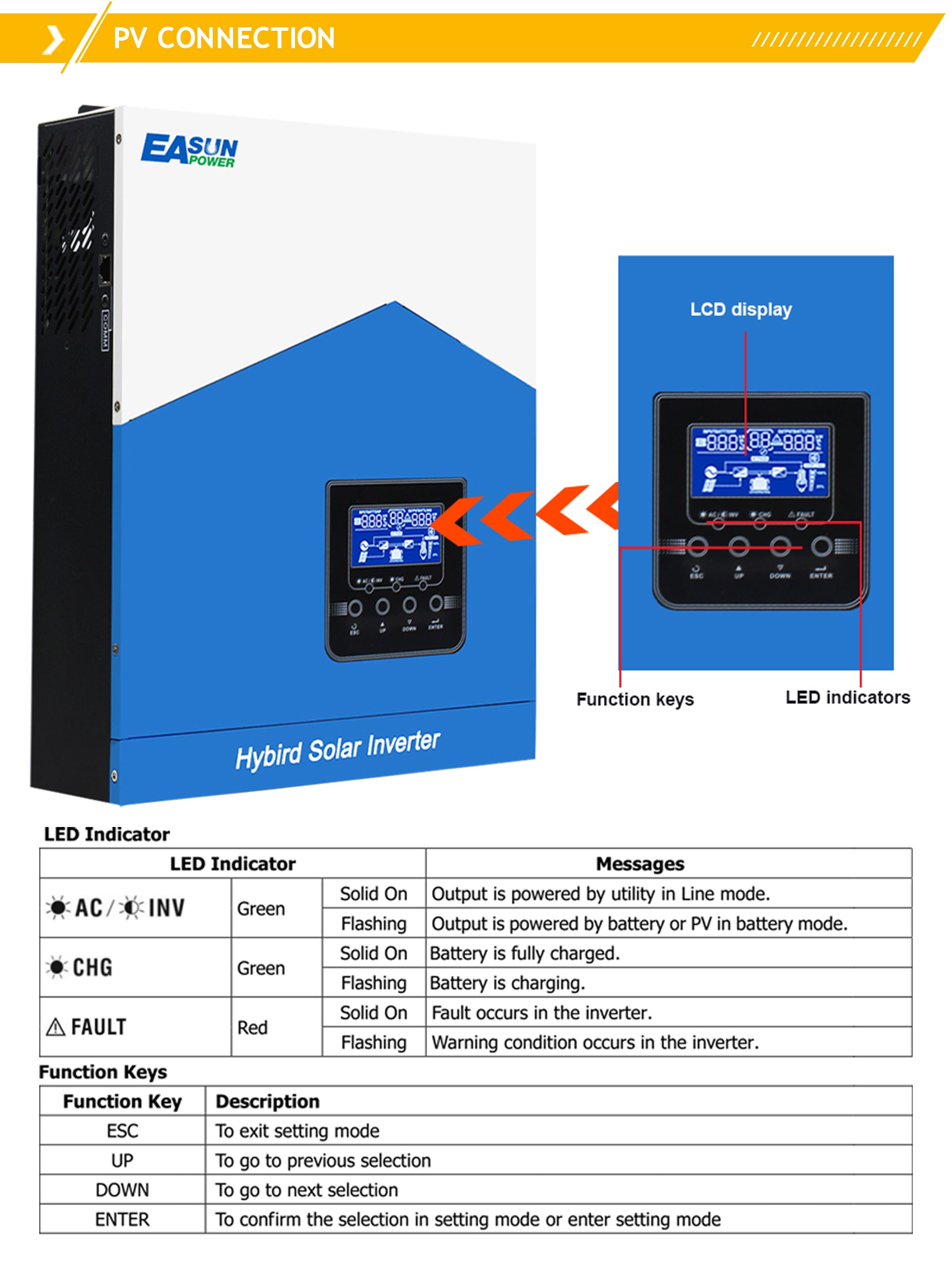
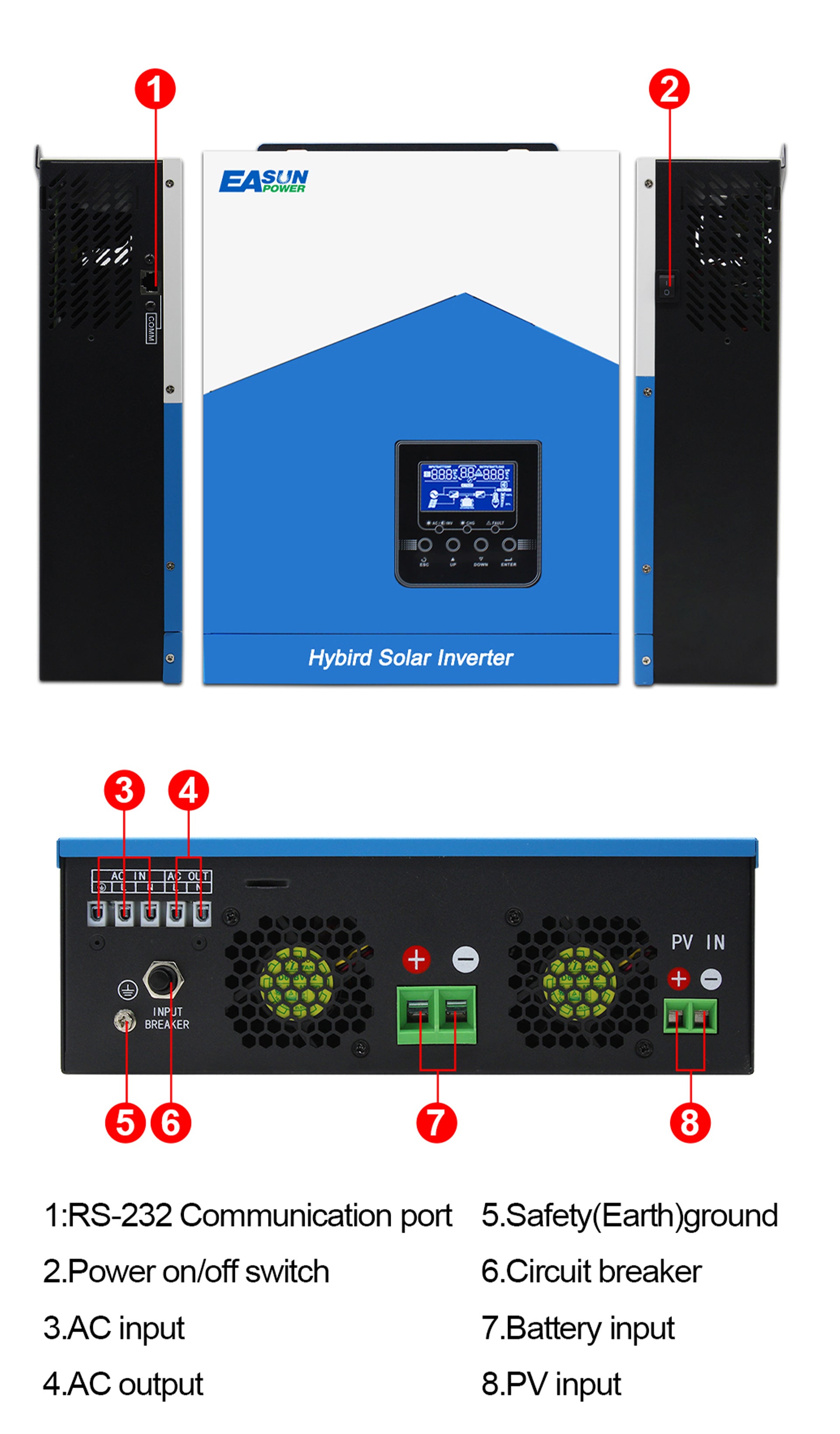
Isolar SMH-II-3.2KW Manual
Frequently asked questions
Still looking for an answer?
1.What is the safe charge and discharge voltage range?
Nominal voltage is 51.2 V, made from 16 cells (3.2 V nominal each).
Full charge (max) is 58.4 V → ~3.65 V per cell.
Discharge cutoff (min) is 40 V → ~2.5 V per cell
2.What are the standard and maximum currents?
Standard charge/discharge: 50 A (≈ 0.25 C).
Max continuous charge/discharge: 100 A (≈ 0.5 C), only at temperatures ≥ 10 °C(51.2V-300Ah is 200A)
BMS will shut off charging/discharging beyond the limits.
3.Can I fast-charge this battery?
Fast charging within the design specs (up to 0.5 C) is acceptable. Going above can stress the battery, reduce cycle life, or trigger BMS protection
4.Are there any hidden costs?
No, there are no hidden costs. All charges, including taxes and shipping (if applicable), are clearly displayed at checkout. We value transparency and aim to provide a hassle-free shopping experience.
5. What is the expected lifespan of this battery?
Our chargers are compatible with all Qi-enabled devices, including a wide range of smartphones and accessories. We recommend checking your device’s specifications to ensure wireless charging support.
6. How do I monitor SOC and cell balance?
BMS performs passive balancing automatically when a cell hits ~3.40 V.
SOC LED indicators show ranges: 0–25%, 25–50%, 50–75%, ≥ 75%.
LCD shows voltage, current, temperature, and balance status.
7. Can I wire multiple batteries for higher voltage or capacity?
Series wiring is not recommended unless done by the manufacturer.
To expand capacity or voltage, it’s safer to use fully compatible modules managed by same-series BMS (max 16 units parallel).
Improper series/parallel wiring may cause imbalance, risk, or invalidated warranty .
8. Can I use a lead‑acid charger to recharge?
No. Lead‑acid chargers operate at lower voltages (≈ 2.3–2.45 V per cell), which results in undercharging and no proper balance—this shortens life and affects capacity. Use a charger designed for LiFePO₄ chemistry (≈ 3.6–3.65 V per cell)
9. Is this battery safe? What about fire risk?
LiFePO₄ chemistry offers higher thermal and chemical stability versus other lithium-ion types.
It’s significantly more resistant to thermal runaway; cell thermal runaway occurs at around 220–240 °C, much higher than NMC‐type cells (~160–230 °C)
Still, avoid physical damage, overcharging, and exposure to extreme temperatures.
Don’t leave it charging unattended, and use only manufacturer-approved chargers and equipment.
Pro Tip: To maximize battery life:
Keep discharge depth ≤ 80% (avoid full cycles regularly).
Operate and store at moderate temperatures (~25 °C ideal).
Avoid charging below freezing, and don’t overcharge beyond cutoff voltages.